Milviz Cessna 414AW
Updated 8 November 2026
A turbocharged aircraft capable of 30,000 ft with a full complement of passengers, offering jet-like range in a piston twin.
Standard day-to-day procedures for a realistic flight experience.
Preflight
Cockpit Setup
0/2Control Locks: Remove (Control column and rudder pedals. Remove the gust lock before any power-up. Leaving it in will jam the flight controls.)
All Switches: Off (All panels. Clean electrical state before battery power is applied.)
Circuit Breakers: In (Lower panel. All breakers pushed in — no circuits isolated.)
Alternate Air Controls: Locked In (Main panel. Confirms the alternate induction air doors are in the normal (closed) position.)
Landing Gear Switch: Down (Main panel. Handle must match the weight-on-wheels state before power-up.)
Emergency Crossfeed: Open (Between the seats. Push down to open. Allows either engine to feed from either tank in an emergency.)
Power-Up
0/3Annunciator Panel: Test (Main panel. Press and hold the annunciator test button. All warning and caution lights should illuminate, confirming bulbs are functional.)
Landing Gear Lights: 3 Green (Main panel. Three green lights confirm all gear are down and locked.)
Battery: Off (Left panel. Off after preflight checks are complete — restarted during engine start sequence.)
Engine Start
Pre-Start Flow
0/9Engine Start
0/5Alternators: Check Amps (Left panel. Confirm both alternators are carrying a positive load after start.)
After Start Flow
0/6Flight Controls: Free & Correct (Yoke and pedals. Full deflection in all axes to confirm no restrictions.)
Before Takeoff
Taxi Flow
0/2Run-Up
Parking Brake: Set (Center pedestal. Hold firmly for run-up power checks.)
Mixtures: Full Rich (Center pedestal. Full rich or leaned for field elevation before run-up.)
Propellers: Full Forward (Center pedestal. Fine pitch for maximum RPM during magneto checks.)
Throttles: 1700 RPM (Center pedestal. Run-up power for magneto and system checks.)
Magnetos: Check (Left panel. Max 150 RPM drop per mag, max 50 RPM difference between L and R.)
Propellers: Check (Center pedestal. Cycle to feather (1200 RPM), then back to full forward. Confirms governor operation.)
Engine Instruments: Check Green (Main panel. All indications in the green arcs before returning to 1000 RPM.)
Vacuum System: Check (Main panel. Verify 4.75–5.25 inHG. Powers the attitude indicator and directional gyro — out of range means gyro instruments may not be reliable.)
HYD FLOW Lights: Verify Off (Main panel. L & R HYD FLOW warning lights should be extinguished at run-up power, confirming both hydraulic pumps are operating.)
Battery Load: Zero (Left panel. Ammeter selector to BATT position. Confirm zero load — the alternators should be carrying the full electrical bus with no remaining draw from the battery.)
Lineup
0/11Takeoff
Takeoff Roll
0/4After Takeoff / Climb
Initial Climb
0/8Anti-Ice: As Required (Left panel. Activate engine and prop anti-ice when climbing through visible moisture at or below 5°C. The 414AW cruises above the freezing level on most flights.)
Air Conditioning: As Required (Left panel. Restore A/C once established in the climb and clear of the takeoff power segment.)
Passing Transition Altitude
0/1Cruise
Cruise Monitoring
0/5Aux Fuel Pumps: Off (Center pedestal. Can be turned off in stable cruise unless fuel flow fluctuations occur.)
Oxygen: Monitor (Cabin. On if cabin altitude exceeds 10,000 ft.)
Anti-Ice: As Required (Left panel. Monitor outside air temperature and visible moisture. Activate engine and prop anti-ice as needed.)
Descent
Descent Prep
0/7Cowl Flaps: Closed (Center pedestal. Closed during descent unless CHT climbs out of the green.)
Descent
0/2Approach
Approach Setup
0/4Anti-Ice: As Required (Left panel. Verify engine and prop anti-ice status for current conditions.)
Configuration
0/6Landing
Landing
Landing Gear: 3 Green (Main panel. Final confirmation of three green lights before the threshold.)
Throttles: Idle (Center pedestal. Slowly retard at the threshold. Gently flare and touch down on the main gear first.)
Shutdown & Secure
After Landing Flow
0/5Cowl Flaps: Open (Center pedestal. Open to cool the engines during taxi.)
Shutdown
0/7Secure
Fuel Selectors: Off (Between the seats. Shut off fuel flow to prevent leaks while parked.)
Control Locks: Install (Yoke and pedals. Prevents wind damage to control surfaces while parked.)
About this checklist
- Aircraft
- Milviz's Cessna 414AW add-on for Microsoft Flight Simulator (MSFS).
- Covers
- 10 phases, from preflight to shutdown and secure.
- Modes
- 120 items in Full mode, 87 in Normal and 25 in Quick.
- Updated
- 8 November 2026
- Corrections
- If a step is wrong, missing or out of order, use Report Inaccuracy at the top of the page. Reports go straight to the maker, and fixes are listed in the changelog.
- Use
- For flight simulation only. Never use it for real-world flying.
Fly Next
Related Checklists
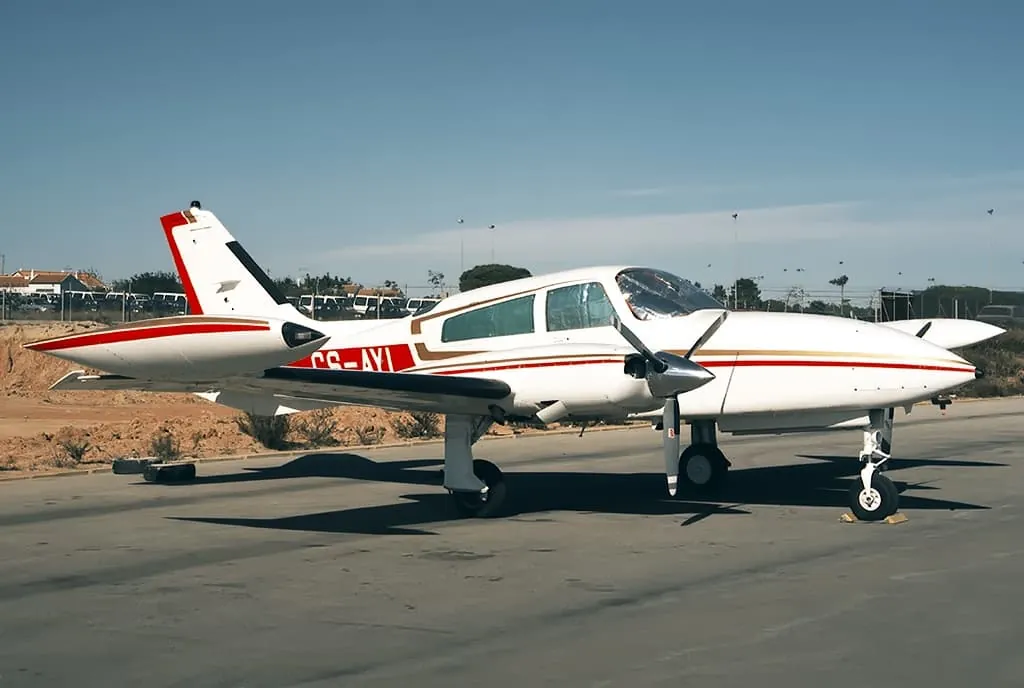
310R
A proven light twin with retractable gear, counter-rotating props, and tip tanks, delivering serious cross-country capability.
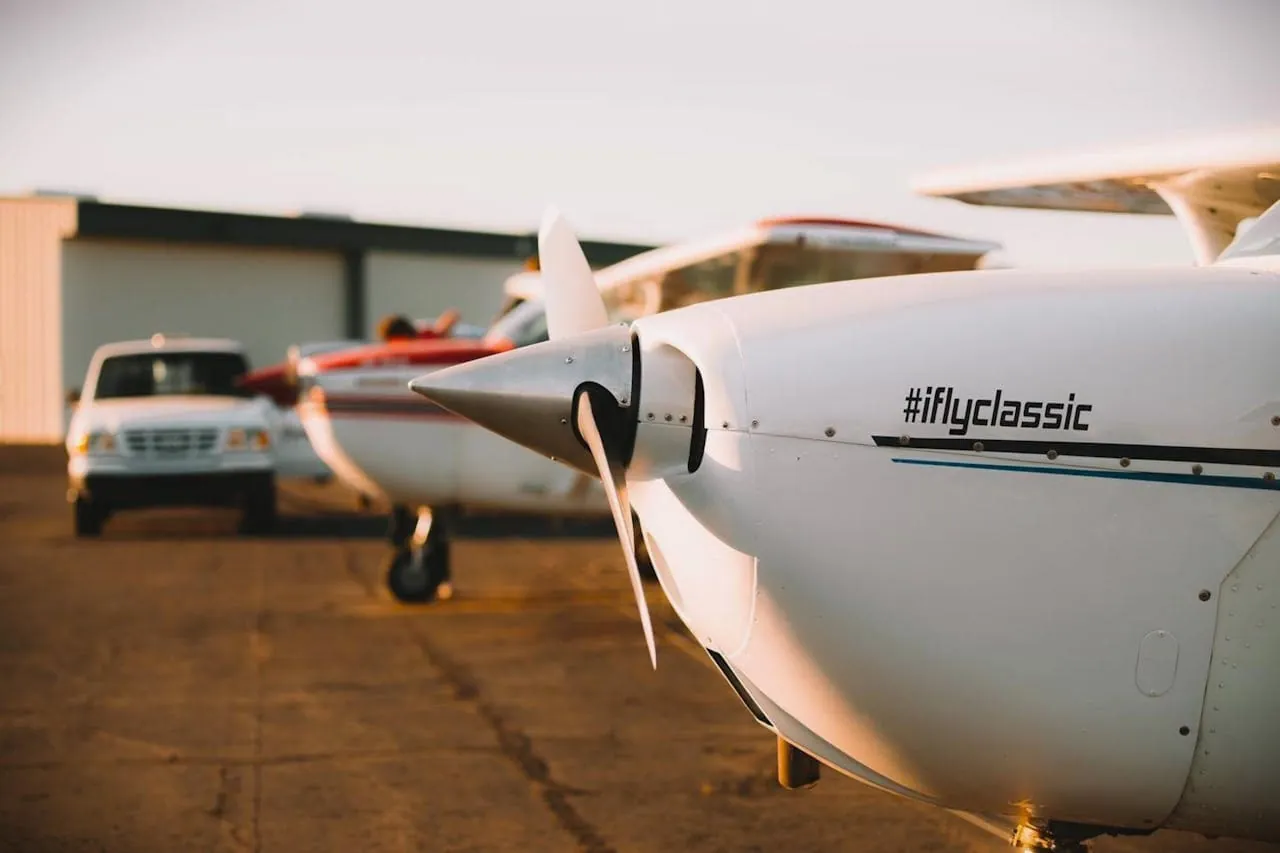
172 Skyhawk
The most produced aircraft in aviation history, celebrated for its legendary reliability and forgiving flight characteristics.
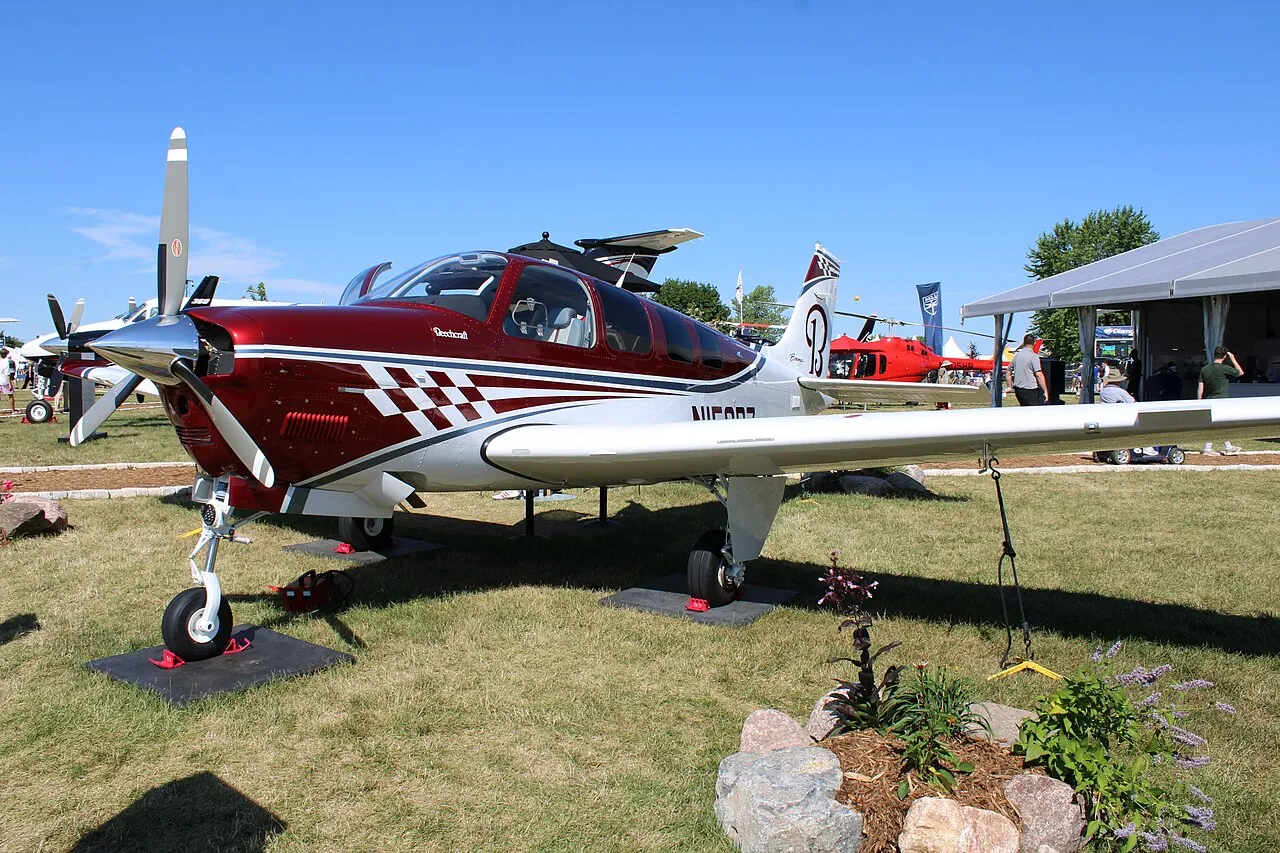
Bonanza G36
Retractable-gear single-engine piston with a PFD and MFD glass cockpit. Max takeoff weight 3,650 lbs, max altitude 18,500 ft, range about 900 NM.